

Signing in or registering with Google
Continue with Google appears at the top of both the login page (/auth/login) and the registration page (/auth/register), above the email/password fields.
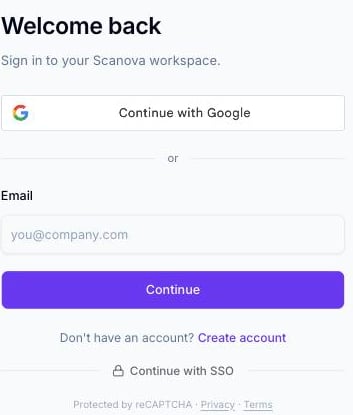
Continue with Google on the login page
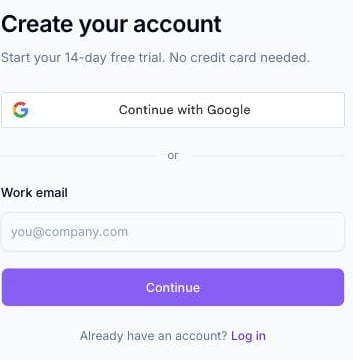
Continue with Google on the registration page
There’s no separate “connect your Google account” toggle in Account settings — Google sign-in isn’t something you link to an existing password-based account after the fact. It’s either how you originally signed up or logged in, or it’s used for the re-authentication described below.
Re-authenticating with Google
Certain sensitive actions — changing your MFA methods, changing your email, or deleting your account — ask you to confirm your identity first. If your account has a password, that confirmation is a password field. If your account has no password (because you signed up or have only ever signed in with Google), Scanova shows a Continue with Google button in its place, so you can confirm via Google instead of a password you never set. This applies in:- The Manage MFA drawer — before adding, changing the default, or removing a method
- The change-email flow in Account settings
- The delete-account flow in Account settings
Related
- Multi-factor authentication — where Google re-authentication appears for password-less accounts
- Single Sign-On — a separate, organization-wide sign-in option distinct from an individual Google account